When Everyone Has Different Numbers, No One Has the Right Ones
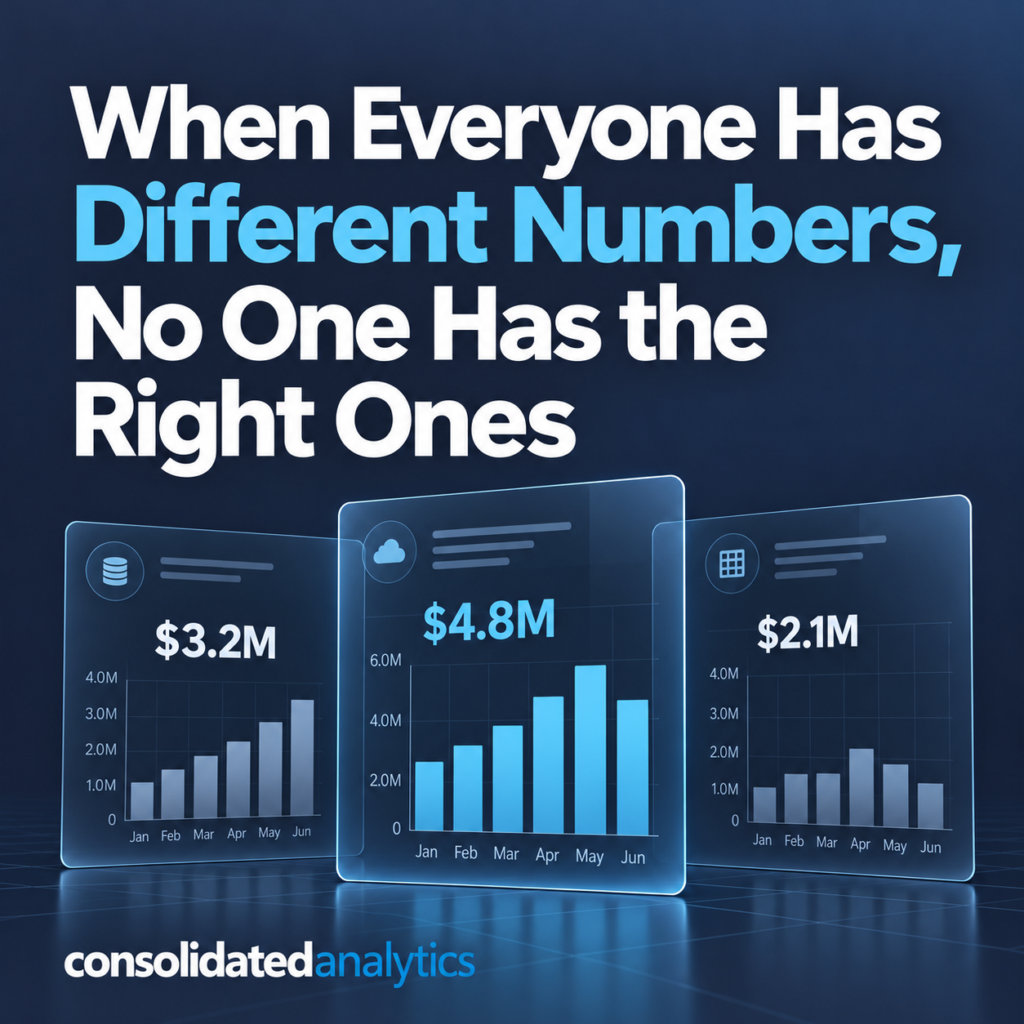
There’s a meeting that happens in almost every organization. Someone presents the revenue figure. Someone else has a different one. A third person pulls up a spreadsheet. Twenty minutes later, the actual agenda hasn’t started yet.
The room has a trust problem.
When sales, finance, ops, and marketing each run their own reporting, they don’t just track things differently; they define them differently. What counts as a closed deal? When does revenue get recognized? Which campaigns get attribution credit? Without shared answers, every cross-functional conversation becomes a negotiation before it becomes a discussion.
A single source of truth ends that.
Not just as a technology concept, but as an operating principle. It means aligning on definitions before the data gets pulled. Standardizing how metrics are calculated. Building governance that keeps the foundation clean over time.
The platform matters, but the discipline around it matters more.
When it works, the shift is immediate. Meetings move faster. Reporting carries more weight. Leadership stops auditing the numbers and starts acting on them.
Teams stop debating and start deciding. That’s the real value, not just cleaner data, but the organizational confidence that comes with it.
The strongest decisions get made when everyone walks into the room with the same facts.